

Car wash
5 Ways to Increase Revenue at a Self-Service Car Wash Without Adding More Bays
Running a self-service car wash sounds simple on paper. Customers pull in, pay, wash their car, and leave. But if you have been in this business for more than a season, you know the reality is more complicated.

Revenue swings with the weather. Weekday afternoons sit empty while weekends get crowded. Customers who used to visit every week disappear after a few months. And every price change, promotion, or new offer means a trip to the location to manually update machines, one by one, location by location.
If any of this sounds familiar, you are not alone. Most self-service car wash operators are sitting on more revenue potential than their current setup captures. The good news is that fixing this does not require new equipment, more bays, or a bigger footprint. It requires smarter systems.
In this blog, we will walk through five proven ways operators are increasing revenue at their self-service car washes today, and how PayRange makes each one practical to execute, even if you are running multiple locations by yourself.
By the end of this blog, you will know exactly where your revenue is leaking, and what to do about it.
Discover 5 Ways to Grow Your Self-Service Car Wash Revenue.
1. Modern payment solutions: Meet customers where they already are

Cash-only self-service car washes are increasingly working against themselves. Fewer customers carry cash regularly, and a customer who pulls up without exact change or a stack of quarters is a customer who may simply leave. Every payment friction point is a potential lost sale, and in a self-service environment, there is no attendant to smooth that over.
Customers today expect to pay the way they pay everywhere else: with a tap, a scan, or their phone. A car wash that cannot offer this is quietly turning away business every single day, even if the loss never shows up as a clear number on a report.
A modern payment system allows customers to pay easily through their mobile phone, removing the dependency on cash or exact change entirely. This lowers the barrier to entry for every customer who pulls into your location, particularly younger customers and anyone who simply prefers cashless payment. Just as important, a good system also gives you complete visibility into payment data and customer activity through tracking, so you are no longer operating blind. You can see transaction patterns, track performance across machines, and understand customer behavior, all of which feeds directly back into smarter pricing and promotion decisions.
“Remove payment friction. Unlock more revenue.”
2. Dynamic pricing: Charge what the demand actually supports
Most self-service car washes still run on fixed pricing. One price, all day, every day, regardless of whether it is a busy Saturday morning or a dead Tuesday afternoon. This flat approach leaves money on the table in two directions.
During peak hours, you are likely underpricing a service that customers would happily pay more for. During slow hours, your price is often too high to pull in the price-sensitive customer who might have visited if the offer was a little better.
Think of a car wash located near a shopping center. Weekend mornings are packed. Tuesday at 2 PM, the bays sit empty for hours. A fixed price ignores this pattern completely. Dynamic pricing responds to it.
The idea is straightforward: adjust your pricing to match real demand. Raise prices slightly during high-traffic windows when customers are willing to pay for convenience. Lower prices during slow windows to bring in volume you would otherwise miss entirely. Over time, this balances your revenue across the day instead of concentrating it into a few peak hours. The key is being able to make these adjustments quickly, without needing to physically visit each machine every time demand shifts.

“Charge the right price at the right time.”
3. Happy hour promotions: Turn dead hours into reliable revenue
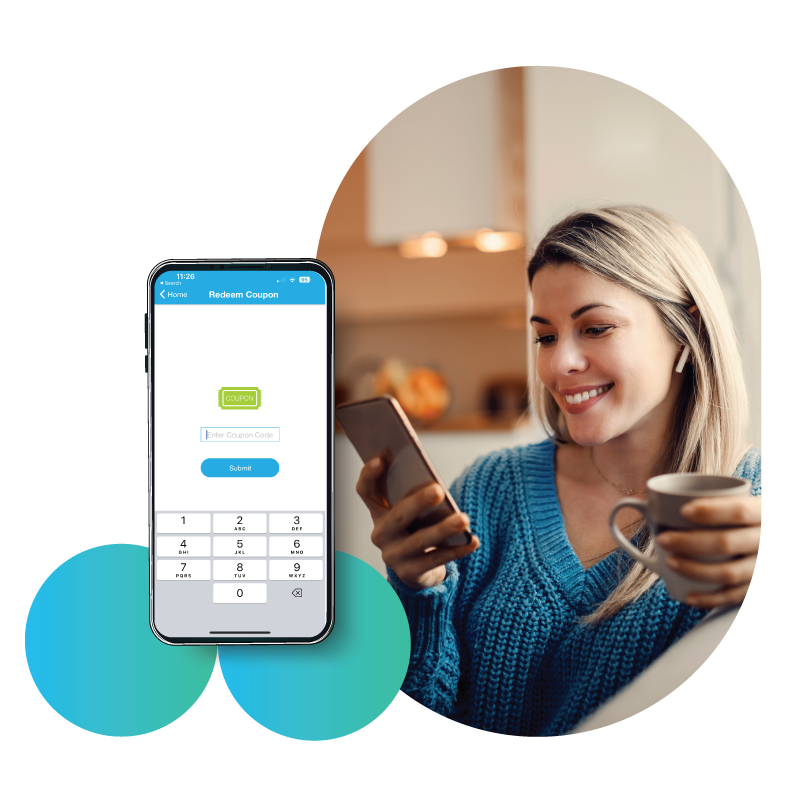
Every operator has a version of the same problem: hours during the day where the bays are simply empty. This is lost revenue that cannot be recovered once the day is over. A wash that does not happen at 2 PM does not roll over to 6 PM.
Happy hour promotions solve this by giving customers a reason to choose your car wash during those specific windows. A modest discount between, say, 1 PM and 4 PM can be enough to shift customer behavior, especially for people with flexible schedules such as retirees, shift workers, or anyone running errands during the day.
The challenge for most operators has never been the idea. It has been the execution. Manually updating machine pricing for a temporary promotion, and then remembering to switch it back, across multiple machines and locations, is a hassle most operators simply avoid. So the promotion never happens, and the slow hours stay slow. Operators who make happy hour pricing easy to launch and reverse are the ones who actually run it consistently, week after week.
“Turn slow hours into profitable hours.”
4. Loyalty program: Turn one-time customers into repeat customers
Acquiring a new customer costs far more than keeping an existing one coming back. Yet most self-service car washes have no structured way to reward repeat visits. A customer who washes their car every week is treated exactly the same as someone who visits once and never returns. That is a missed opportunity, especially in a business where repeat visits are what actually drive steady monthly revenue.
A loyalty program changes this dynamic. When customers know they are earning something toward a future reward, they are more likely to choose your location over a competitor down the street, and more likely to return sooner than they otherwise would.
A good loyalty program should be simple to run and tied specifically to your business, so the rewards a customer earns can only be redeemed at your machines. This keeps the loyalty, and the repeat spend, within your operation instead of spreading it across every competitor using the same generic rewards network.
“Turn first-time customers into loyal regulars.”
5. Multi-location management: Run every site from one place
If you operate more than one self-service car wash, you already know the hidden cost of growth: more locations usually means more driving, more manual updates, and more time spent simply keeping things consistent across sites. Every hour spent traveling between locations to update pricing or check on machines is an hour not spent growing the business.
This is where many multi-location operators unintentionally slow their own progress. Decisions that should take minutes, like launching a promotion across all locations, end up taking days because of the logistics involved in visiting each site individually.
Being able to manage every location from a single platform removes this bottleneck entirely. You no longer have to travel between stores to run your operation, which saves significant time and reduces the day-to-day hassle of running multiple sites. Viewing business reports from all locations in one place also means you can make decisions based on real numbers instead of guesswork.
“Spend less time driving. More time growing.”
How PayRange Brings All Five Strategies Together
Knowing what to do is only half the battle. Running all five strategies without it becoming a full-time job is where most operators get stuck. PayRange gives you one system to bring dynamic pricing, happy hour promotions, a loyalty program, modern payments, and multi-location management together in one place.
Instead of juggling separate tools or manual processes for each strategy, PayRange lets you manage pricing, promotions, loyalty rewards, payments, and multiple locations from a single platform. This means less time spent on manual updates and driving between locations, and more time focused on actually growing your business.
“One system. Endless opportunities to grow.”
What this means for you and your customers

When these five strategies work together, the benefits extend beyond a single revenue line.
For you as the operator:
- More consistent revenue across slow and peak hours through dynamic pricing
- A practical way to run promotions without the manual hassle of updating machines individually
- Repeat customers driven by a loyalty program that keeps spend within your business
- Fewer lost sales due to payment friction
- Significant time savings if you manage multiple locations
- Full control and visibility, all from your phone
For your customers:
- Fair pricing that reflects when they visit
- Real savings during happy hour windows
- Rewards for their loyalty that they can actually see and use
- A payment experience that matches what they expect everywhere else
- A consistent experience whether they visit your location down the street or across town
“Better for your business. Better for your customers.”
Final Thoughts
Increasing revenue at a self-service car wash does not require reinventing the business. It requires paying closer attention to the patterns that are already there: the slow hours, the missed repeat visits, the payment friction, and the operational overhead of running more than one location.
Dynamic pricing, happy hour promotions, a loyalty program, modern payment options, and multi-location management are not five separate projects. They work together as a single strategy: meet customers with the right price at the right time, reward them for coming back, make paying effortless, and manage all of it without adding hours to your week.
If you are ready to see where your car wash locations are leaving revenue on the table, start with just one change this week. Small, consistent adjustments are usually where the biggest gains come from.
If you want to see how a platform like PayRange can help you put these strategies into practice, reach out to the team for a quick demo and explore what fits your business best.